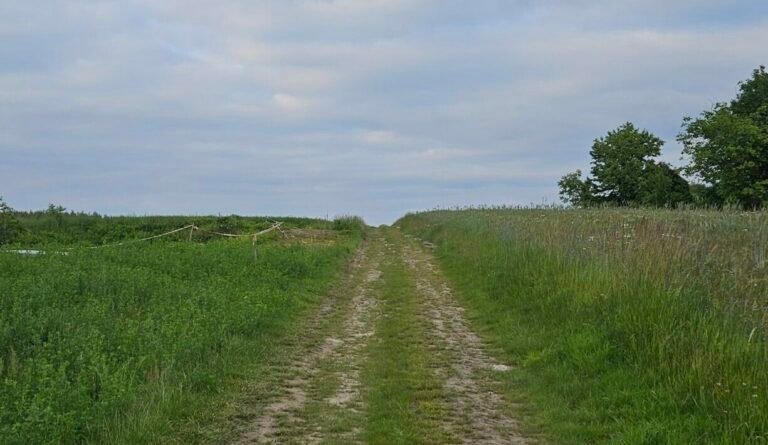
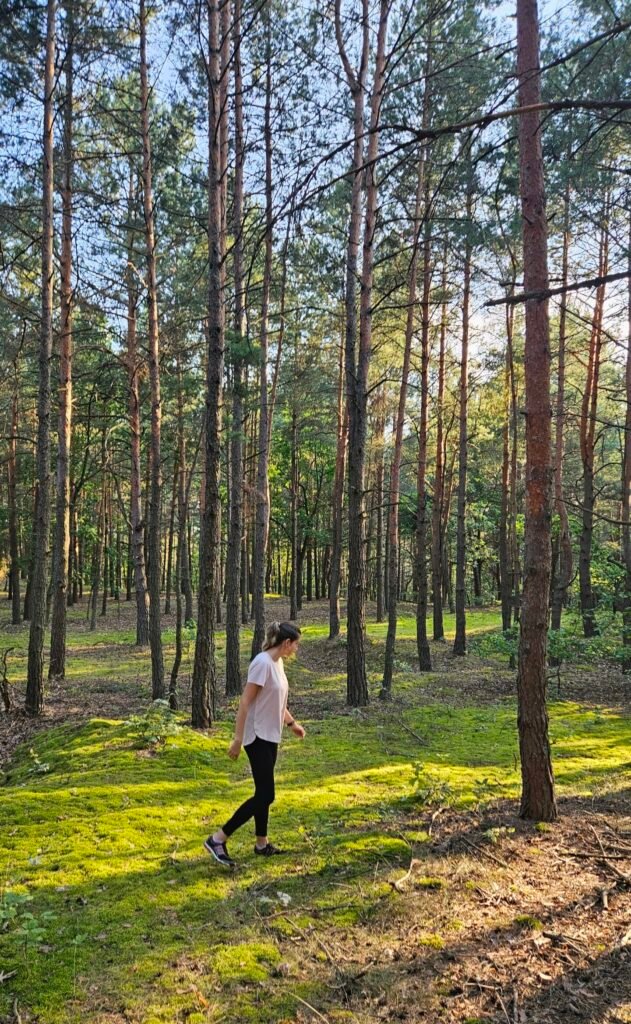
How do you feel when strolling through a forest? Peaceful, rejuvenated, awestruck perhaps. It is, after all, healthy to connect with nature and disconnect from the distractions of modern society (see: “forest bathing”).
Now consider the history of that forest. I don’t mean the history of the plant life—moss paving the way to a complex ecosystem that supports a variety of plants and animals. I’m talking about the history of what went on within the forest. More about that in a bit.
The beauty of Polish forests
Poland has many beautiful, large forests, one of the most spectacular being the 8,000-year old Puszcza Białowieska (Białowieża Forest). Along with primeval plant life, you can find animals like lynx and bison in Białowieża. Other famous areas include Tuchola, Niepołomice, and Old Crooked Forest.
In fact, nearly 30% of Poland is forest. No need to visit a UNESCO World Heritage site or Tripadvisor park to experience a peaceful walk in the woods. Some of the most serene experiences may await you in that the “regular old” forest down the road.
Feeling the impact of war
The beauty of Polish land—from its parks to its cities—is undeniable. However, it’s no secret that throughout its history, Poland suffered a great deal: from the Swedish Deluge in the 17th century, to the Partitioning of Poland in the 18th century, to the German and Soviet invasions and occupation in the 1900’s. These events were marked by destruction, both of land and people, and it’s impossible not to feel the effects when travelling throughout the country.
Castles pillaged and burned during war, military bunkers, German concentration camps, fields where German v2 missiles were tested and launched…an entire city rebuilt after being leveled by Nazis in response to its residents standing up for their nation.
And the massacres…mass executions performed by Germans and Soviets, mainly in the Polish forests.
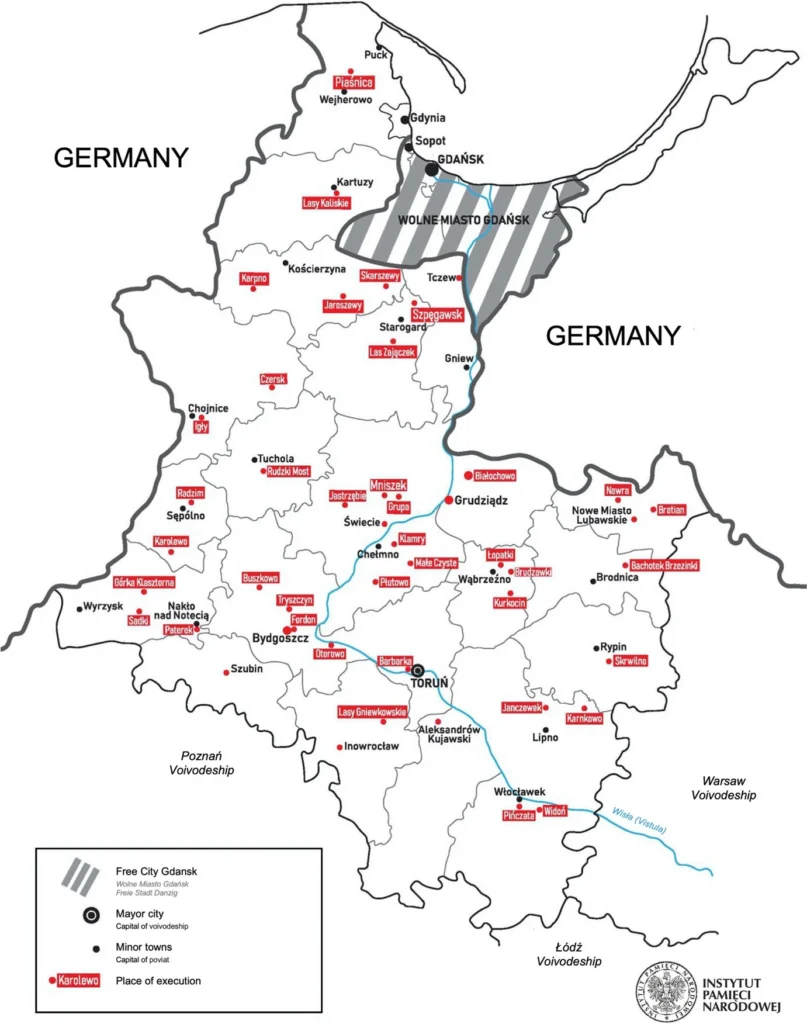
In 1940, the Katyń massacre resulted in the deaths of nearly 22,000 Polish individuals—intelligentsia, police officers, military, among others—at the hands of the Soviets. A year earlier, the Germans murdered more than 2,500 people in the Szpęgawski Forest and 600 people in the Barbarka massacre. In 1939, mass executions of Poles were a daily occurrence.
The following map shows the locations (in red) of the mass crimes in just the Pomerania region of Poland.
Details about these tragic events are being uncovered decades later, thanks to archaeological research such as that of Dawid Kobiałka and colleagues.
It is tempting to imagine that certain events are too horrific to have actually happened. Unfortunately, the evidence proves otherwise.
How the Nazis nearly killed my grandfather
My grandfather Kazimierz, who died decades before I was born, worked for the State Police prior to World War II. When the Germans invaded Poland, Grandpa broke off from the force: a staunch opponent of working for the Nazis in the so-called Blue Police, having to take orders against his own people.
Since participation in the Blue Police was compulsory for State Police members, the Germans did not take kindly to desertion. Captured by the Nazis, my grandfather was punished and taken to the forest, where the soldiers ordered him to dig his own grave. Miraculously, he was able to escape, and spent months hiding in nearby barns, nearly dying of malaria. He was targeted and harassed by the authorities for years after the end of the German occupation.
Undeterred by these near-death experiences, Grandpa joined the Home Army (Armia Krajowa), one of the largest resistance movements in Europe during the War. It was at a Home Army meeting that he met my Grandmother, and the rest is history (and a story for a future blog post).
The takeaway
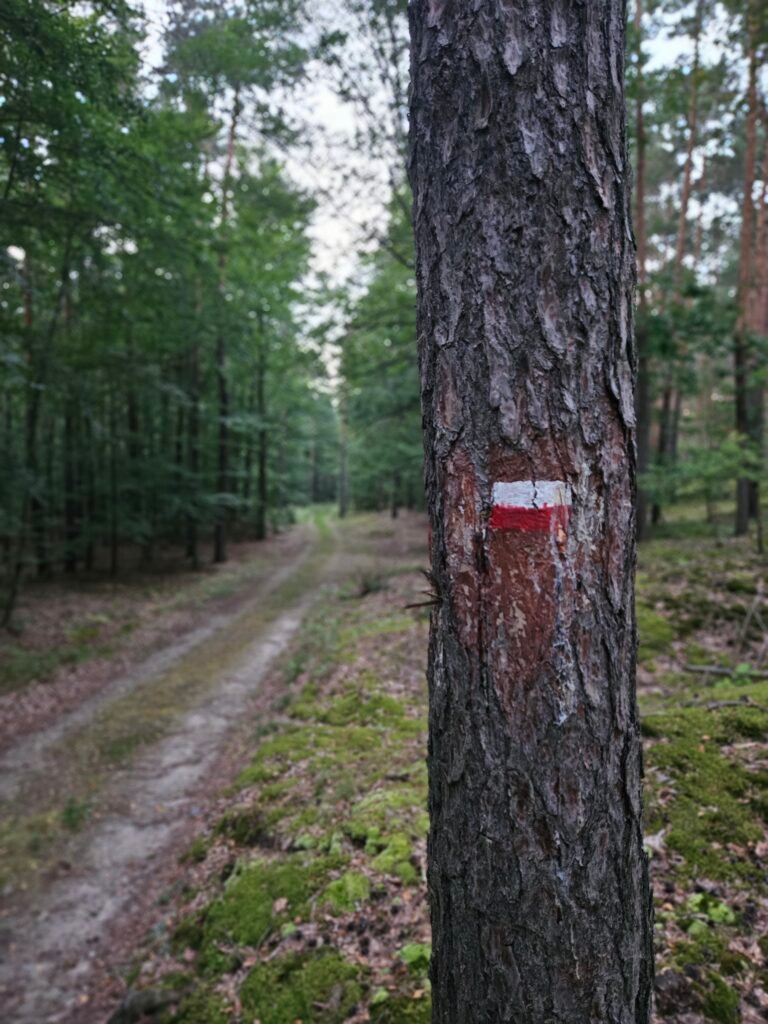
My hope is that this history does not deter you from visiting and enjoying Polish forests, but instead will inspire you to the contrary: soak up the fresh air, go mushroom-picking (with an expert), marvel at the moss-laden floor, and enjoy the peace.
The stories may be morbid, but they are crucial to painting a complete picture of the Poland and for remembering all who fought, and those who died, for their nation.