A glimpse into Christmastime in Poland, to the tune of the English Christmas carol, Twelve Days of Christmas*.
*Please note that not all numbers reflect the actual amount of the item…they just sounded fun.
On the twelve days of Christmas, we Polish folk enjoyed:
Twelve meatless dishes
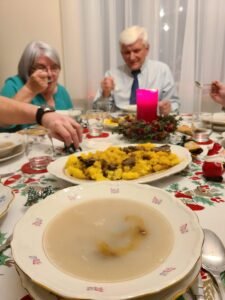
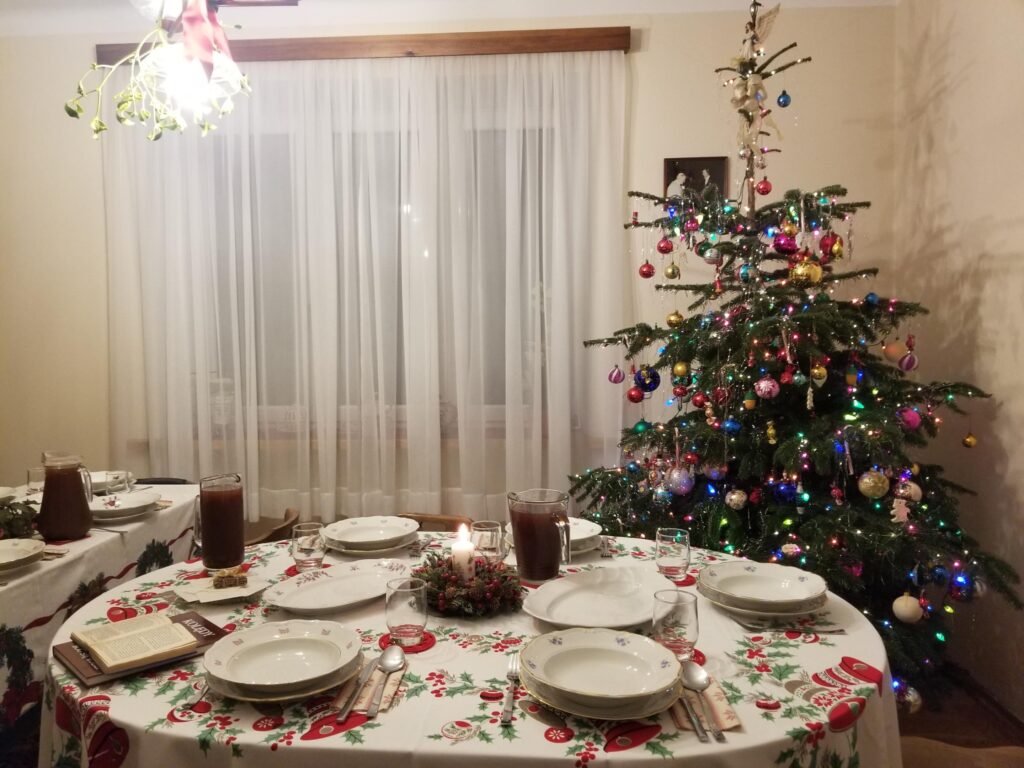
Arguably the most eventful and important evening of the Polish year, Christmas Eve, or Wigilia, consists of an elaborate supper of twelve dishes. The number is symbolic of Jesus’ twelve disciples. The secret to enjoying all twelve is moderation (which can be tough after an entire day of fasting!)
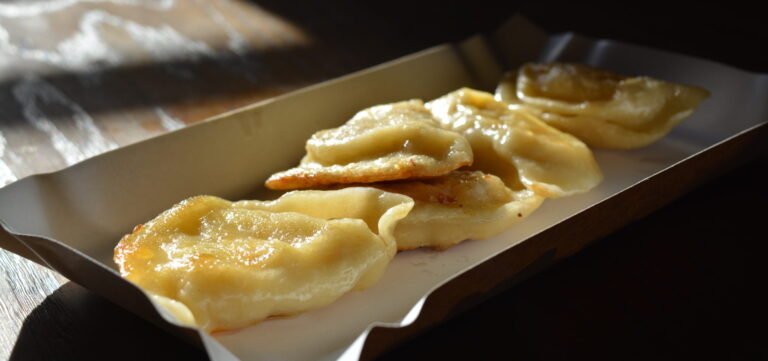
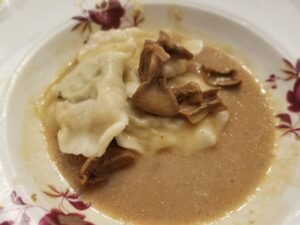
Common Wigilia dishes include barszcz, mushroom sauce (likely prepared from one’s own foraged mushrooms), pierogi with cabbage, sauerkraut, beans, and fish. The traditional beverage is kompot z suszu, which is made by simmering dried fruit (primarily prunes) and spices in water. My favorite is decidedly the first meal: barszcz with mushroom sauce and a side of potatoes. There’s just something special about that first, hot spoonful of broth!
Eleven handmade baubles
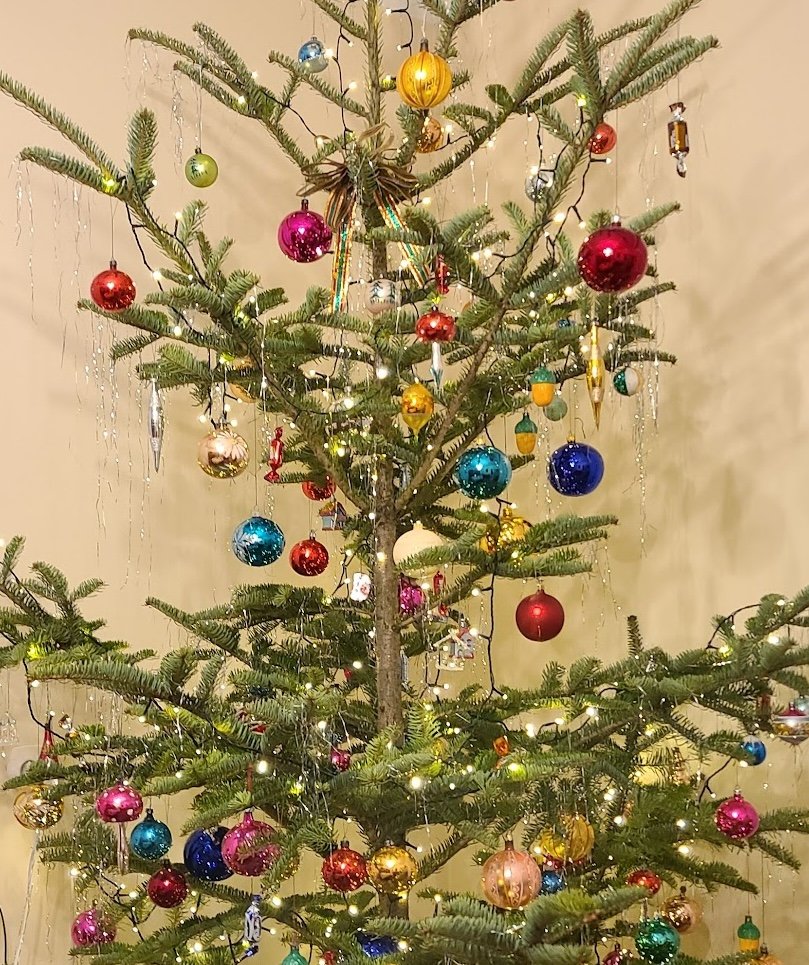
Poland is one of the largest exporters of hand-made Christmas ornaments, particularly glass baubles. Factories date back to the late 19th century, where the glass was blown into shape (some into intricate designs), dipped in paint, and meticulously decorated. This practice continues to this day, and Poland continues to produce beautiful, high-quality baubles exported worldwide (such as this Christmas Tree from the Nutcracker by the Komozja Family.) It’s always a delight to see the “Made in Poland” tag on an ornament in the store.
Traditionally, Polish people would decorate their Christmas tree on Christmas Eve and keep it up for weeks after the holiday. Christmas trees would feature, among homemade decorations and candles, an assortment of colorful glass baubles.
Interestingly, prior to the 19th century, Polish families would adorn their homes with a podłaźniczka, or the top of a conifer tree hung upside down. The branches would be decorated with items like apples, paper and straw decorations, walnuts, and ornaments made from wafers (known as “światy” which literally translates to “worlds”).
Ten singing Herods
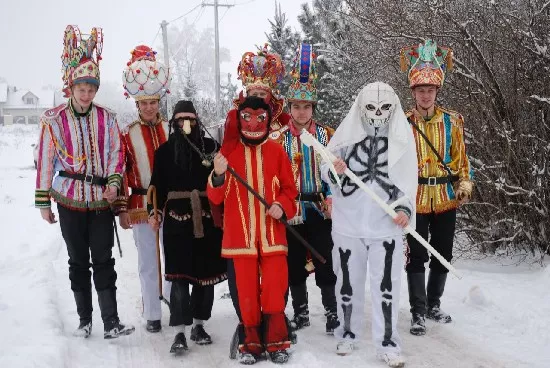
For centuries, caroling has been a staple of the Christmas season in Poland. The tradition took on various forms depending on the region: for example, some areas celebrated a more elaborate, theatrical version known as herody (“Herods”). The tradition, dating as far back as the 13th century, featured young people dressed up as various characters including: King Herod, an angel, the devil, Death, the Three Wise Men, and others. In exchange for a treat (monetary or sweet), the group would perform a scene depicting the condemnation of Herod for the slaying of the Innocents in Bethlehem (based on Matthew 2 16:19). Although less common, this tradition is still alive and well in many regions of the country.
Nine festive carols
During Wigilia, people will sing carols between meals in celebration of Christ’s birth. Some of the most popular koledy include: Bóg się rodzi (God is born), Cicha noc (Silent Night), Dzisiaj w Betlejem (Today in Bethlehem), Gdy sie Chrystus rodzi (When Christ is born), Lulajze Jezuniu (Sleep little Jesus), Przybieżeli do Betlejem (The Shepherds Rushed to Bethlehem), and many others. Unlike in the United States, Polish carols are not generally sung before Christmas as the traditional tunes are religious in nature and directly reference Christ’s birth.
Eight horse-drawn sleighs
A tradition dating back to the 16th century, kulig, or a sleigh ride party, was a pastime of the aristocracy. Several horse-pulled sleighs would go from one manor to the next, celebrating with a feast and dances upon arrival. Today, for many reasons, this tradition is no longer popular. In its place, however, is a different form of kulig: a row of sleds tied together and pulled by a tractor or car (on an empty, country road of course). I definitely remember doing this as a kid!
Seven juicy citrus
Back when rations were part of daily life in Poland, and even later in the 90s before the country recovered to the state it’s in today, receiving citrus as a gift from Santa was a real treat. Not only were the fruit hard to find, they were costly (Poland does not grow citrus fruit, obviously). Still, many Polish people remember receiving this “luxury” item from Santa!
Sixth of December
Speaking of Santa…unlike most places, Santa does not visit Polish homes on Christmas. Instead, he brings presents on December 6th, also known as the Feast of St. Nicholas. That’s why he is able to get to everyone else on the 25th. You’re welcome!
Five blessed wafers
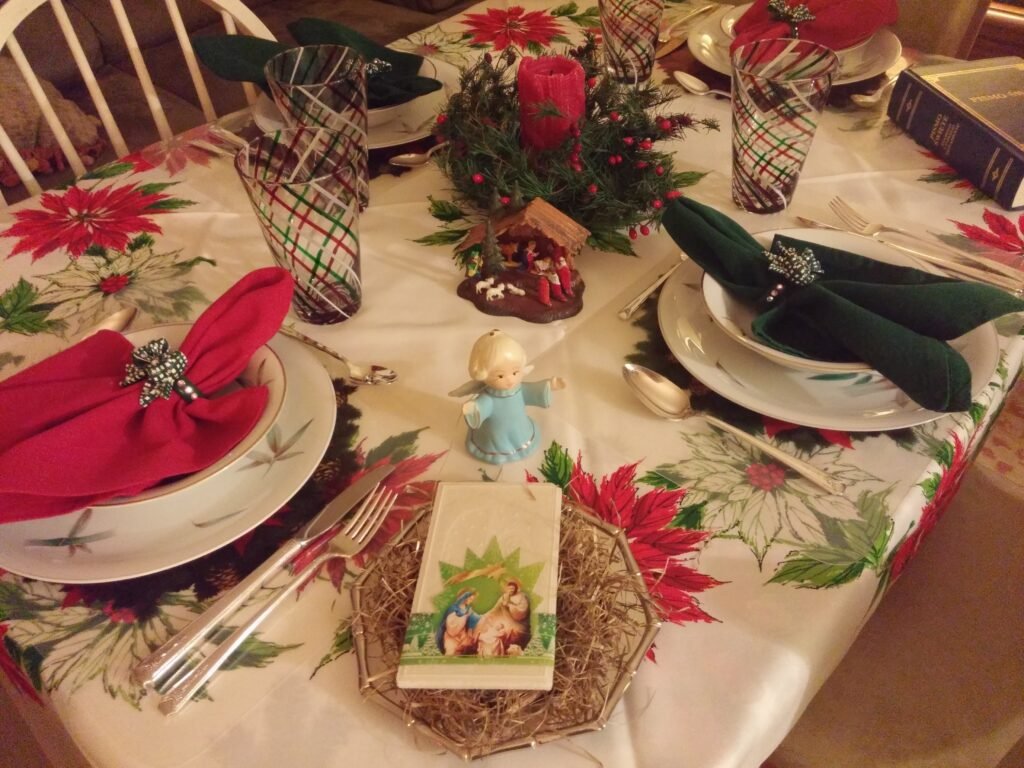
Prior to Wigilia, a prayer is said, followed by the exchange of the blessed wafer or opłatek. The wafer is thin, rectangular shaped, and embossed with religious imagery. Family members and friends will grab a wafer and offer each other a piece while exchanging good wishes.
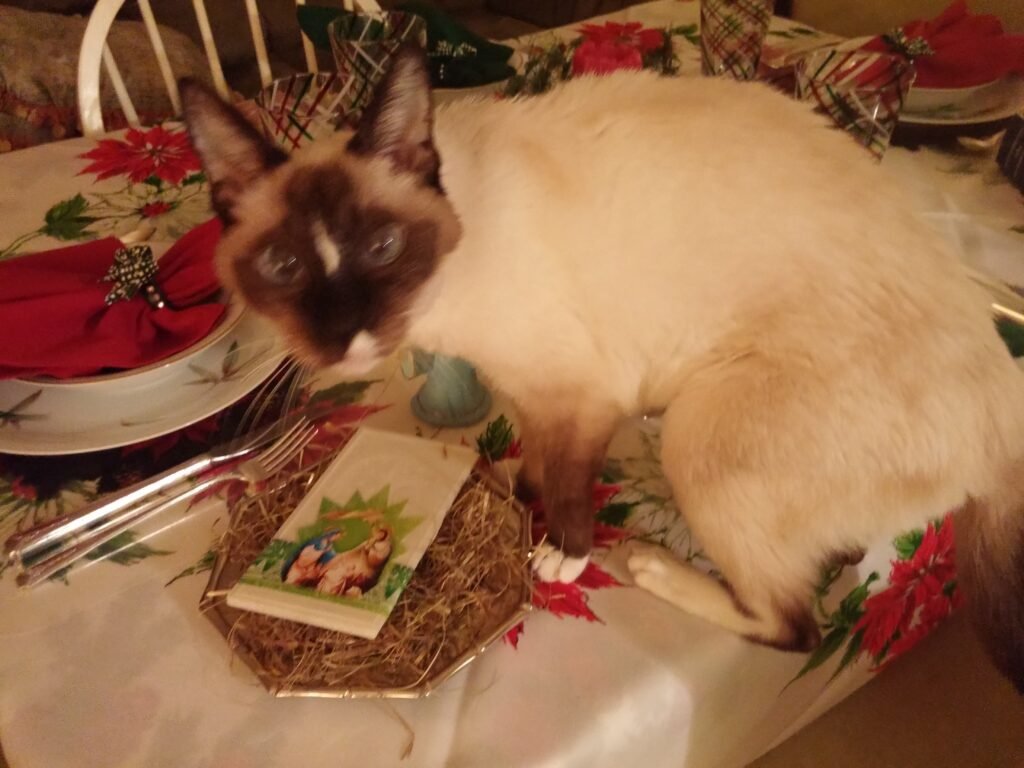
Four talking cats
Legend says that, on Christmas Eve, animals are allowed to speak as a reward for helping welcome Jesus to the world. Our cat Zuzia would always try to out-sing us during Christmas Eve supper, so I can assure you, it’s true.
Three Wise Men
The Three Wise Men, or Magi, were led to Jesus by the Star of Bethlehem. Traditionally, the appearance of the star in the night sky is the signal for families to begin their Christmas Eve supper.
January 6th, or Three Kings Day (also known as Epiphany), is a Christian holiday widely celebrated in Poland. Using chalk that has been previously blessed, members of Polish households will write three letters above their doorframe: CMB (or KMB). Although interpretations of the letters vary, they either represent the initials of the Three Wise Men or the Latin phrase Christus mansionem benedicat, translated to “May Christ bless this home”. This is done to protect the household from evil.
Two bathtub carp
Are you really Polish if you didn’t have a carp swimming in your tub before Christmas? The best way to ensure it’s fresh for the holiday….Carp is the traditional fish that, at least in our household, was the final meal of the night.
…and a very merry Polish Christmas!
If you made it this far, thank you for reading! Wishing you and yours a joyous and peaceful Christmas and holiday season.
References
„Jaka Wigilia, taki cały rok” – dawne tradycje i zwyczaje bożonarodzeniowe. https://dzieje.pl/dziedzictwo-kulturowe/jaka-wigilia-taki-caly-rok-dawne-tradycje-i-zwyczaje-bozonarodzeniowe
.