As a kid, I was not a fan of Easter. Easter meant lots of church going: from Stations of the Cross each Friday during Lent, to rekolekcje (Masses devoted to spiritual reflection), to the Easter Triduum.
Over the years, however, the holiday became one of my favorite seasons. A serial contemplator, I appreciated the Lenten emphasis on reflection and living intentionally.
Although Easter is a Christian holiday, there are a few traditions specific to Poland and Eastern Europe–traditions that we’ve sought to maintain while living in the United States.
A colorful Palm Sunday
Palm Sunday, the celebration of Jesus’ entry into Jerusalem, kicks off Holy Week. According to the Bible, crowds welcoming Jesus laid palms at this feet in veneration. Hence, for this Mass, churchgoers receive palm leaves upon entering the church. Unless they are in Poland….
In Poland, individuals bring their handcrafted palms to Mass. The elaborate “palms” are made using colorful paper, dried flowers, willow branches, and more, varying in height and color. In the US, my talented sister Ania created a beautiful, tall palm made of faux flowers, greenery, and pastel-colored ribbons. We always took this palm to Mass–though we were surrounded by other handmade palms, as it was a Polish Mass.
I remember the first time I celebrated Palm Sunday at an American Mass–I was shocked to see the “palms” distributed to mass goers. They were so flat, so bare! Of course, they were actual palm leaves, but…where was the color, the handiwork?!
The Easter Triduum
With a reading of the Passion of Christ, Palm Sunday foreshadows what is to come later in the week. A key observance during the Liturgical Year, the Easter (or Paschal) Triduum is celebrated beginning Holy Thursday, followed by Good Friday, and ending with the Mass of the Resurrection of the Lord. This Mass can be celebrated during the Easter vigil on Saturday evening or on Sunday morning. Simply put, the Triduum encompasses the Passion, Crucifixion, Death, and Resurrection of Jesus Christ.
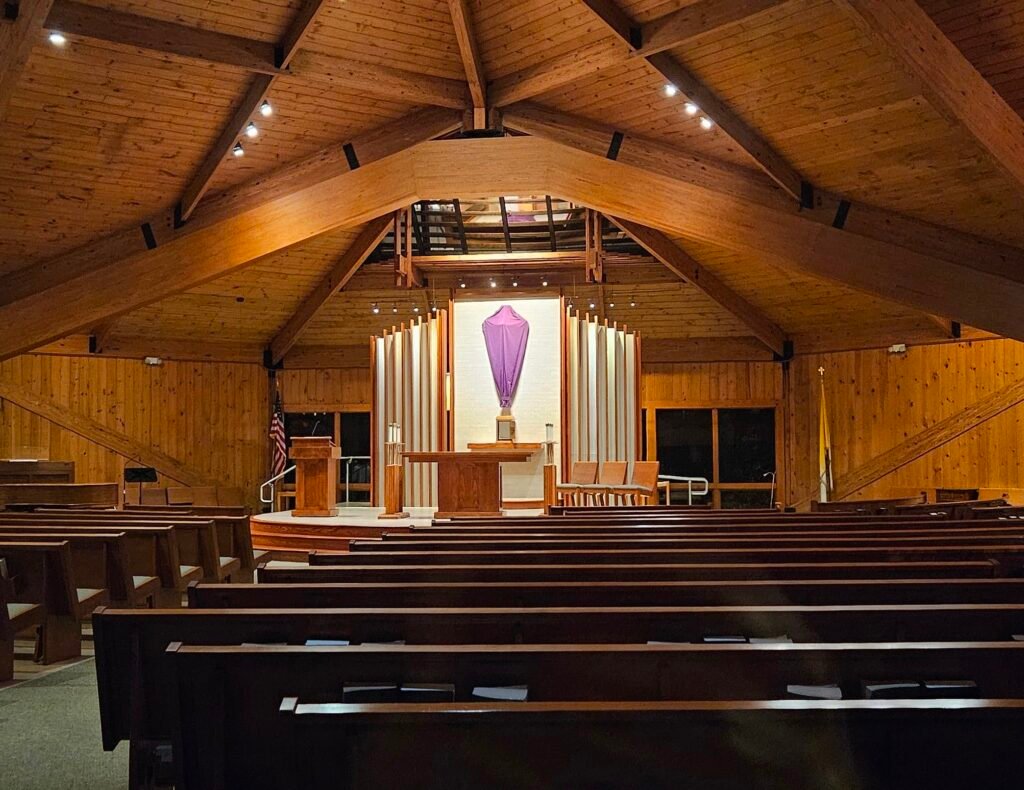
There aren’t significant differences between Poland and the US in the ways Holy Thursday or Good Friday are celebrated. Holy Thursday begins the Triduum. The Mass entails the washing of the feet ritual, symbolizing Jesus’ washing his disciples feet. The Mass concludes without a blessing, in silence, as the Eucharist is moved to the altar of repose and the faithful gather in prayer. This is symbolic of Christ’s procession from the Last Supper to the Garden of Gethsemane where he was ultimately betrayed. I always found this Mass and procession to the altar of repose particularly moving.
During the Good Friday Mass, the Triduum continues with a reading of the Passion of Christ followed by Stations of the Cross, a 14-step ritual that further commemorates Christ’s passion and death. Back when we lived in Brooklyn, our Church used to do an incredible procession for Stations of the Cross. The congregation would traverse 15 Brooklyn streets, singing hymns, praying at every station until they reached the final stop of a neighboring Catholic church. The prayers were performed in English, Polish, and Spanish. It was a beautifully solemn procession.
The blessed basket
On the evening of Good Friday, it is customary to dye eggs and prepare the Easter basket for blessing, which takes place Saturday morning. A tradition unique to several cultures including that of Poland, the basket (or Święconka) includes several symbolic foods:
- Eggs – life, resurrection
- Horseradish – physical strength, energy
- Salt – cleansing
- Meat – abundance, health
- Bread – body of Christ
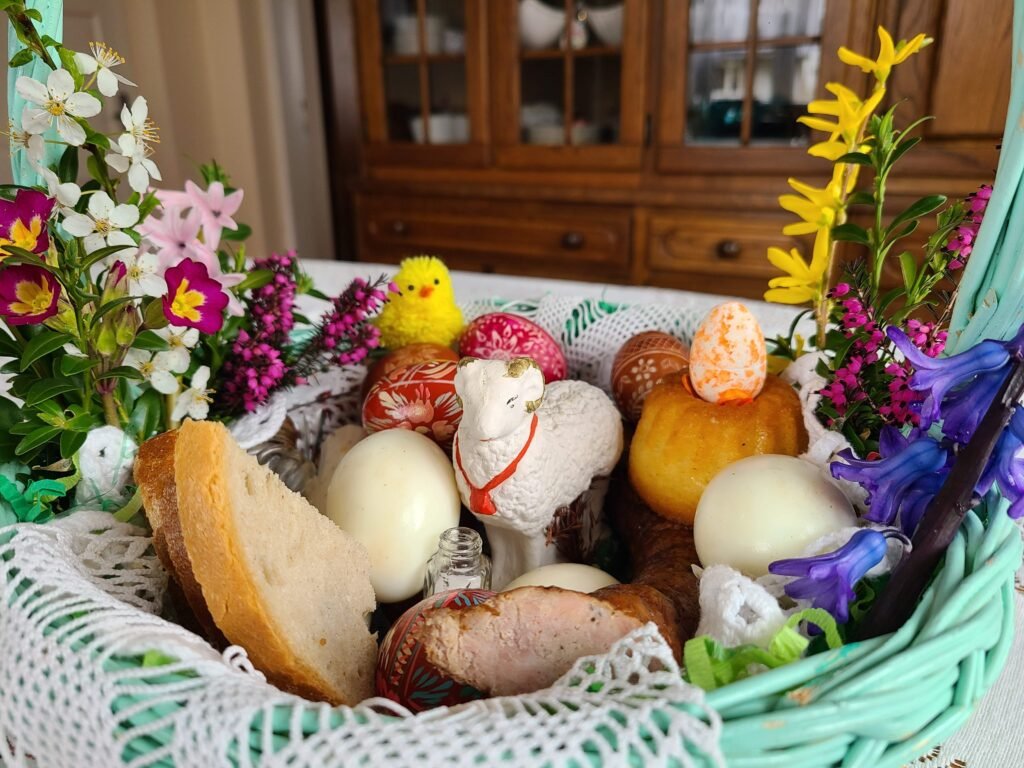
On the morning of Holy Saturday, we would go to church, where the priest would bless all of the baskets. After returning home, the person carrying the basket had to circle the building three times for good luck!
I am thankful that we can now carry on the Święconka tradition at our local church. It is not a Polish church, but the priest has instituted this custom, with clear interest from the several parishioners who show up with their very elaborate baskets!
Easter breakfast
The main celebration of Easter is Mass of course, but the second most important event is breakfast. Much like with Christmas Eve dinner, Easter breakfast (and second breakfast) consists of a few traditional customs and dishes.
Prior to the meal, families will gather around the table to pray. Afterwards, they will exchange well wishes along with pieces of egg from the blessed Easter basket (similarly to the exchange of opłatek before Wigilia).
After that, it’s time for food! The first traditional meal is the white barszcz with kiełbasa, egg, horseradish, and bread. The hot soup is slightly sour in a delightful way (thinking about it is making my mouth water!), especially coupled with the juicy kielbasa and spicy horseradish root.
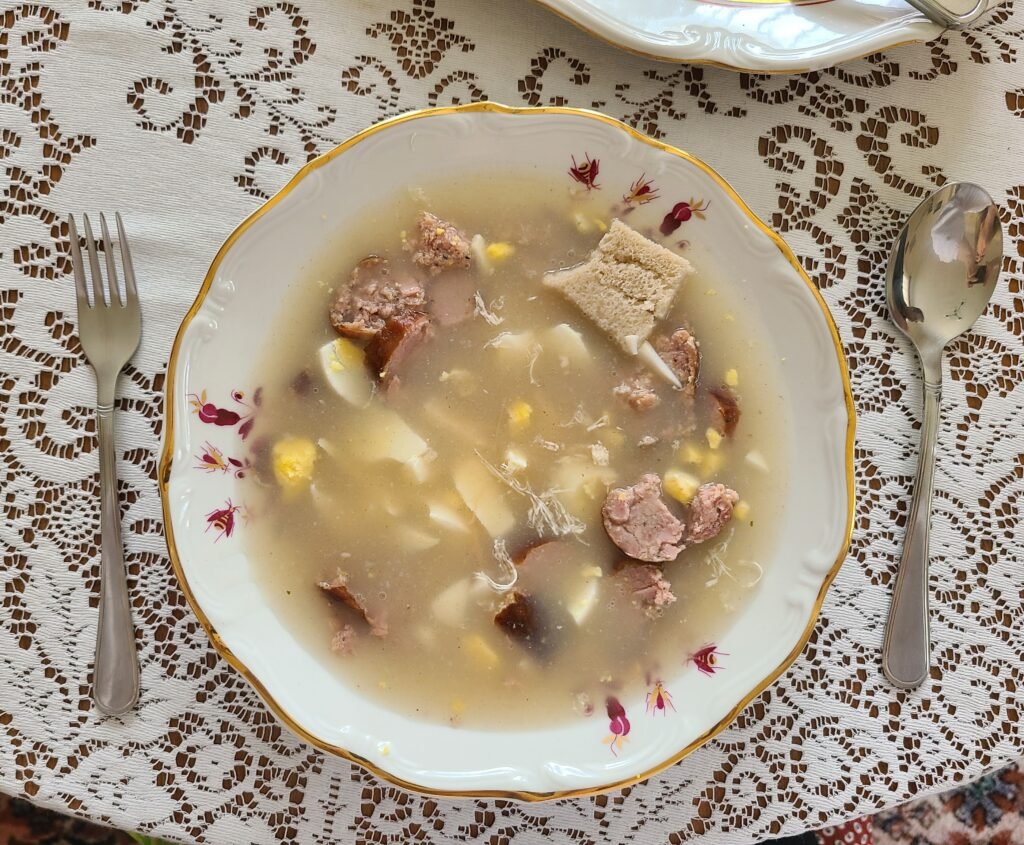
After breakfast, we’ll usually have some dessert with tea or coffee. Some popular Easter sweets include mazurek, makowiec (poppy cake), cheesecake, and babka.
Then for second breakfast, or I suppose lunch, we’ll have a variety of cold cuts along with:
- vegetable salad (sałatka jarzynowa)
- eggs, mayo, and horseradish
- grated beets and horseradish
- Polish tartar sauce, which includes dill pickles and pickled mushrooms
In other words, lots of eggs (and horseradish!)
Wet Monday, or Śmigus-dyngus
On the second day of Easter, or Easter Monday, people continue the celebration of the Resurrection by going to Mass. In Poland, the day is also known as Lany Poniedziałek, or Wet Monday (or Śmigus-dyngus). On this day, people drench each other in water–for fun! The origins of the holiday aren’t totally clear, but a common story (as shared on Culture.pl) goes like this:
“…way back when, on Easter Monday, boys in the countryside would be allowed to drench girls with water and smack them with branches of pussy willow. Although it sounds terrible, it was usually meant as a way to show their affection (and likely resulted in some marriages later on).”
Aside from that, time is spent, as you may have guessed, enjoying the edible delights from the previous day. After 40 days and 40 nights of penance and solemnity, it is time to rejoice!