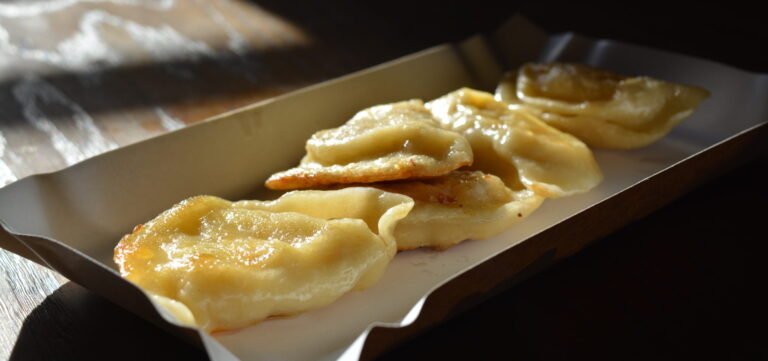
Much like with pierogi, it seems like most people know about pączki (poh-tsch-kee). You tell someone you’re Polish, they tell you they love pączki.
But what makes the Polish doughnut so special?
(Hint: it’s the yeast. Or the lard.)
What is a pączek?
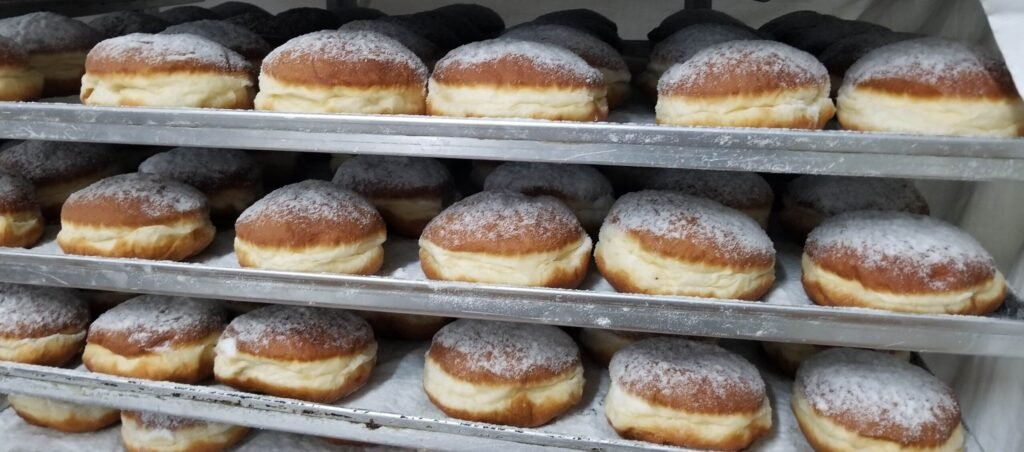
A pączek (the singular form of the word) is a doughnut, but it differs from the American version you’re used to seeing at Dunkin’ or local bakeries.
Taste-wise, pączki are richer. Traditional pączki are filled with rose hip jam or plum marmalade, and covered with powdered sugar or a glaze. They have a fluffy pillow shape, unlike their hole-y cousins.

As for how they are made, many of the ingredients are similar to other types of doughnuts: flour, eggs, sugar, butter, milk, a pinch of salt. Unlike some American doughnuts (known as “cake doughnuts”), however, pączki are always made with yeast, which gives them an airy consistency. The traditional pączki recipe also calls for a tablespoon of spirits or vodka—not for the taste, but to help decrease the absorption of fat into the doughnut. This is important because the balls of dough are then deep fried in oil and lard.
This is a great video (in Polish, but you can turn on English CC) showing the pączki-making process based on the creator’s family recipe.
Pączki Day, a Polish-American celebration
I have lived in the US for three decades and only recently learned of Pączki Day.
Granted, it isn’t as widespread in New York City as in Detroit or Chicago, where bakeries across the city offer their patrons elaborate selections of pączki. Still, over the years, the celebration has grown in popularity as evidenced by boxes of the Polish doughnuts in supermarkets all over the country.
Apparently, Pączki Day is the Polish-American version of Fat Tuesday, celebrated right before Ash Wednesday, which marks the beginning of Lent in Western Christian traditions. And it’s the Americanized version of the Polish Fat Thursday, which is celebrated a week earlier. Both festivities are part of Carnival, a pre-Lenten period marked by celebrations and over consumption (e.g. Mardi Gras).
This year, Pączki Day falls on February 17th. Unfortunately, most of the pączki sold in supermarkets have little to do with an actual pączek. If you’ve ever bitten into one and thought, this tastes a lot like an Entenmann’s donut, it probably was.
If you’re able to, visit a Polish deli for the real deal. They usually have pączki all year round, but ramp up production during the weeks leading up to Lent.
Fat Thursday, a pre-Lenten tradition
Now onto the Polish tradition: Fat Thursday.
Although it is still a period of reflection and abstinence, Lent was a little more strict in the Middle Ages. During this somber, 40-day period of rigorous fasting, people abstained from eating meat and dairy products. Fat Thursday provided an opportunity to use up foods that would otherwise spoil. Initially, the “fat” referred not to sweets but to fatty meats like kielbasa and bacon, or rolls stuffed with meat. Only in the 16th century were pączki with sweet fillings like marmalade and cream introduced.
Pączki are not the only sweet enjoyed on Fat Thursday, though according to government data, people in Poland eat approximately 100 million pączki on that one day.
Also popular are:
- faworki or chrust – deep fried dough covered in powdered sugar
- ruchanki – apple pancakes made with yeast
- róża karnawałowa (carnival rose) – deep fried pieces of dough formed into a rose shape
Years ago, I was fortunate to spend Fat Thursday in Poland. During that time, my sister outdid herself, making over 50 pączki in addition to faworki. Let’s just say we were glad we had the extra days before Lent….
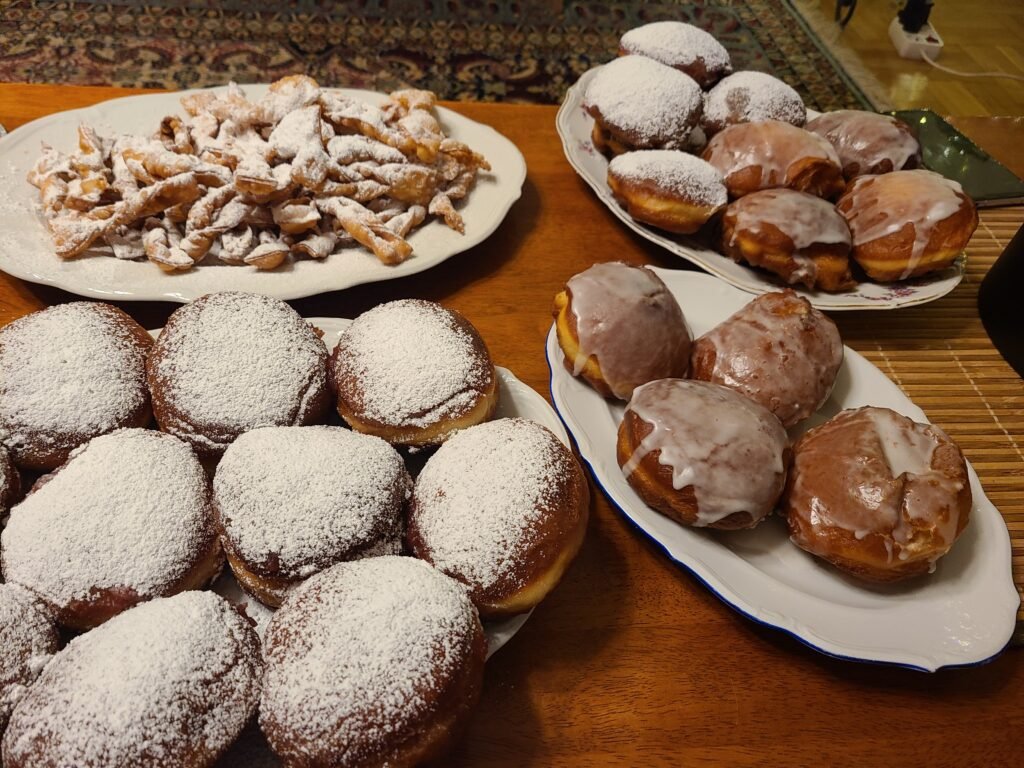
So, if you can, make sure to have a pączek this Fat Thursday. As the Polish folk saying warns,
“Kto w tłusty czwartek nie zje pączków kopy, temu myszy zjedzą pole i będzie miał pustki w stodole.”
Roughly translated to “Whoever fails to eat pączki on Fat Thursday will have their fields eaten by mice and barns emptied.”
Better safe than sorry!
Where to get pączki in the United States
I did some internet sleuthing to find out where to get good pączki in different areas of the U.S. Please note that I haven’t been to these places, but have added them here based on positive reviews from users on Reddit. You can also check if any Polish associations in your area are having Fat Thursday events.
Baltimore, Maryland
Brooklyn, New York
Chicago, Illinois
Clearwater, Florida
Cleveland, Ohio
Detroit, Michigan
Milwaukee, Wisconsin
Orange, California
Passaic, New Jersey
Rockville, Maryland
References
“Medieval Era Lent Was Stricter And Odder Than You Think” Victoria Brittain, 12 Tomatoes. February 28, 2024. https://12tomatoes.com/medieval-lent-history/
“Skąd się wziął tłusty czwartek?” Tomasz Sowa, CiekawostkiHistoryczne.pl. February 27, 2025. https://ciekawostkihistoryczne.pl/2025/02/27/skad-sie-wzial-tlusty-czwartek/
“Tłusty Czwartek” Powiatowa Stacja Sanitarno-Epidemiologiczna w Świdwinie. February 8, 2024. https://www.gov.pl/web/psse-swidwin/tlusty-czwartek
“Traditional Polish donuts, a very old recipe, how to make donuts?” Swojskie Jedzonko. January 15, 2020. https://www.youtube.com/watch?v=N9eV3Sd9-V4&t=1s
“Tradycyjne pączki – bardzo stary przepis” Swojskie Jedzonko. January 15, 2020. https://www.swojskiejedzonko.com/2020/01/tradycyjne-paczki-bardzo-stary-przepis.html