I don’t know about you, but when I was a kid, I didn’t care too much about family history. I’d never met my grandparents—nearly all of them had passed before I was born—and my parents didn’t often share stories. From time to time, I’d hear murmurings of my late grandmother’s ailments: a year-long stay at a sanatorium to treat tuberculosis, debilitating aches from a spinal injury, and an illness that would eventually lead to her death.
As a kid, it didn’t occur to me to ask why grandma had been so sick. It seemed inappropriate to ask my mom about the causes of her mother’s suffering.
When I eventually recognized the importance of delving into my family history, I was eager to know everything. And what I learned ended up hitting me like a ton of bricks.
My grandmother’s lifelong agony, turned out, was very likely a result of the Soviet labor camp where she was imprisoned from 1944 to 1946.
Born in a state of conflict
After more than 100 years of partitions, Poland had regained its independence in 1918. Unfortunately, due to the complicated nature of this shift, the country was thrust into further conflict, and its citizens paid the price.
My grandmother Maria was born during this time, on August 15, 1921, in the rural town of Kolbuszowa in southeastern Poland. Maria was one of seven children, raised primarily by their mother, Joanna. Their father set out for the United States a couple of years after Maria’s birth, with the goal of supporting his family from afar.
As political upheaval grew and inflation exploded at an unimaginable rate, poverty became rampant, with individuals struggling for food and work. Despite the hardships, Joanna benefited from the help of her older kids as well as her husband abroad. Early in 1939, the family moved out of their home and into a house on the outskirts of town.
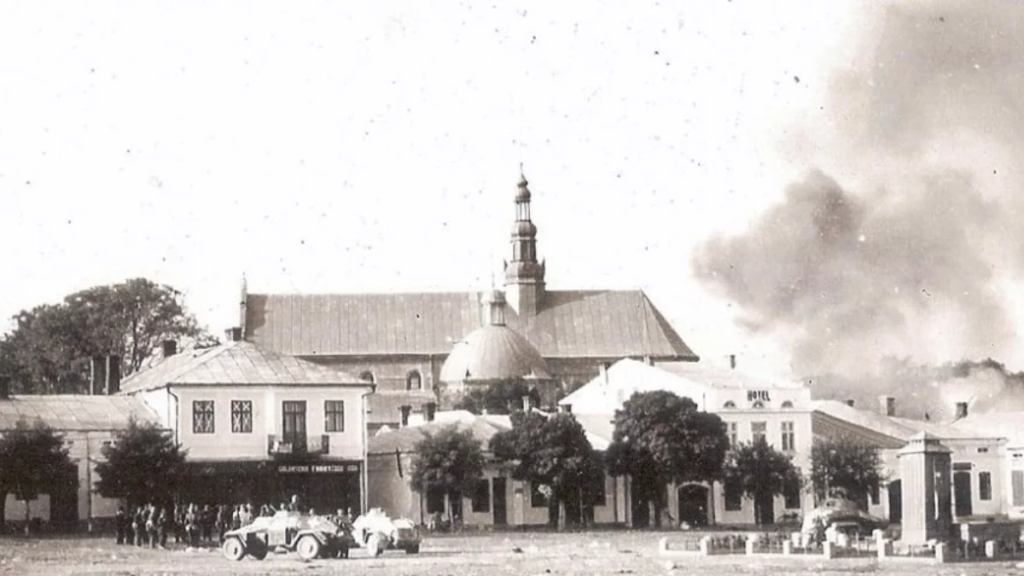
It was a fortuitous move: a mere months later, the Nazis would march through Kolbuszowa, burning Maria’s childhood home to the ground.
Joining the resistance
Maria had just turned 18 years old when the Second World War began. What should have been the most beautiful years of her life would turn into some of the most terrifying and tragic.
The Nazi and Soviet invasion of Poland during World War II brought upon years of brutal repression of the Polish people. With the goal of eliminating the Polish nation and culture, the occupiers exterminated 6 million Polish citizens.
Despite facing extreme danger, hundreds of thousands of Polish citizens stood up to the injustices, many joining the underground resistance movement known as Armia Krajowa (Home Army). The Home Army, one of Europe’s largest underground movements, was responsible for sabotaging German transports, destroying German supplies, and fighting various battles, including Operation Tempest and the Warsaw Uprising of 1944. The organization worked in alliance with the Polish Government-in-Exile.
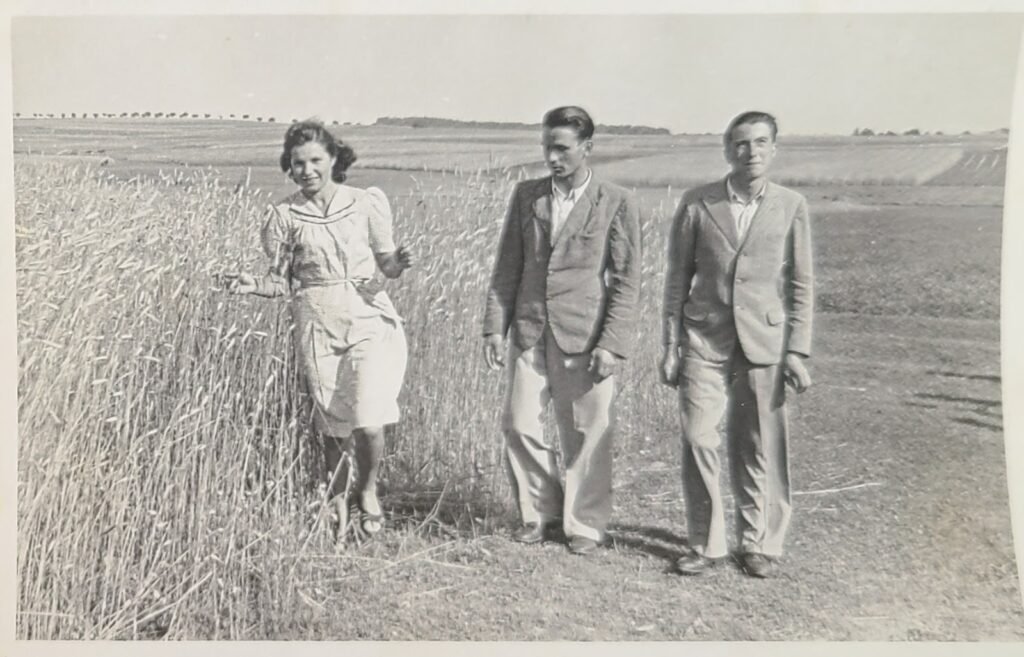
Maria’s two brothers, Władek and Jan, were active members of the Home Army. Although my grandmother never officially swore the oath of allegiance, she occasionally attended meetings and acted as a liaison. That is where she would meet her future husband (my grandfather), Kazimierz.
The interrogation
Please note that the details below are based on an account of my grandmother’s experiences, collected and archived by late historian Halina Dudzinska.
The Soviet regime in Poland punished individuals who exhibited any disloyalty to the state. In the fall of 1944, the NKVD (People’s Commissariat for Internal Affairs, the Soviet secret police) and UB (Ministry of Public Security, the counter-espionage agency operating in the Polish People’s Republic) began arresting Home Army members and affiliates from Kolbuszowa. People would disappear without a trace.
On November 7th, in the afternoon, Maria and her brothers were taken for interrogation.
In a large room in the UB Headquarters, Maria was questioned about her involvement in the Home Army: her status, alliances, and motives. For every answer, the officers beat my grandmother on the head, face, and back. When too much blood had accumulated on her face, they’d stick her head in a water basin that they’d placed on her lap. After more than an hour of interrogation, Maria was dragged up to the freezing attic, where she’d spend two weeks alone with minimal food or warmth.
The 12-day journey
In late November, after two weeks in the attic, Maria, along with a group of her acquaintances, were placed in a transport to a labor camp in the USSR. After a few days of traveling in truck beds, they arrived on the eastern border of Poland, in Przemyśl, where my grandmother and 2,000 other people—now prisoners of the NKVD—were loaded onto a freight train. No one knew where they were being taken to or how long the journey would take.
Inside each car, which held about 40 people, there was an iron stove and an opening in the floor, serving as a latrine. Each person was given a German military overcoat. From time to time, the prisoners were given pieces of bread and a pot of soup (mainly water flavored with herbs). There was enough for two spoonfuls for each person in the car. Water was distributed rarely, so the prisoners would lick the frost from the wagon walls to attempt and quench their thirst.
During the transport, some prisoners attempted to escape, jumping out of the wagons into the darkness. While some did so successfully, most escapees were shot.
As the days and nights grew colder, people’s health worsened and despair grew. They spent most of the time praying, some reminiscing, trying to maintain hope.
Surviving in a gulag
On the 12th day of the frightening journey, the train came to a halt: the sign at the station read Borovichi. Borovichi was—and is—a large town halfway between Moscow and St. Petersburg (then Leningrad). At the time, it was the location of a large forced labor camp complex No. 270, with thousands of Polish prisoners affiliated with the Home Army. (This was only one of many complexes throughout the vast expanse of the USSR, with mass deportations of Poles beginning years prior.)
People emerged from the train exhausted, weak, and cold, with many having suffered from frostbite along the way. After roll call, where grandma learned that her brothers were part of the transport, the officers led the group for 15 kilometers through the snow-covered town. Townspeople who had gathered to watch shouted obscenities.
“By morning, we stood before a camp—a gulag—a complex of barracks encircled by rows of barbed wire, alongside which rose watchtowers almost identical to those we had known back home in the German concentration camps. The only difference was the massive red star hanging above the entrance gate.”
Maria was first admitted to the Szybotowo camp within the complex, located on a barren landscape. The barracks housed Poles, Germans, and Hungarians. After a period of quarantine for the newcomers, they were inspected and assigned various jobs: women worked in the kitchen, laundry, sewing room, or store room. Most of the men worked outdoors, on the roads or in the forest, facing the elements of the harsh Russian winter. Others took on roles of craftsmen, tailors, and shoemakers. In other camps, prisoners also worked (and many perished) in coal mines under extremely dangerous conditions.
My grandmother worked a variety of jobs, from laundry, washing bloodstained military uniforms, to sewing, to cooking. A daily work quota was assigned for each job: if a person did not meet the quota by the end of their shift, they would be denied their food ration.
Her brothers, it turned out, were in Jegolsk, a camp a few kilometers to the north, and worked as shoemakers. At one point, prisoners were exchanged from one camp to the other, and jobs reassigned. And so the months and seasons went by, until winter returned, with something very dark in store for my grandmother.
Solitary confinement in a bunker
In the winter of 1945, Maria was placed to work in the camp kitchen. For the stove to work, the women had to maintain a fire, cutting and replenishing wood. The saw that they used to cut the wood had been borrowed by the men, who is it for their work outside. Without thinking of the potential consequences, grandma ran to the men’s block to retrieve the saw. This act was, unfortunately, strictly forbidden. She was spotted by two Russian officers, who grabbed and threw her into a solitary confinement bunker as punishment for this “major crime”.
Grandma spent three harrowing days in a frigid, windowless basement. She lay on the cement, imagining these to be her final moments. She managed to survive the ordeal, but caught a terrible cold that would impact her health for the rest of her life.
After being released from the bunker, Maria was taken to the camp hospital. After some rest, she returned to the barracks and continued to weaken. Her hope of returning home was diminishing.
A positive turn of events
In February of 1946, the unthinkable happened: Maria and her brothers, along with some of the other prisoners, were released. Loaded back onto freezing freight cars, the freed Poles made their way back home.
Once safe at home, Maria was immediately sent to a tuberculosis sanatorium. With a bad back and a host of other ailments resulting from her time at Borovichi, she took painful injections into her spine and slowly recovered.
In 1947, Maria married Kazimierz, and a year later, she gave birth to my mom. Despite the “normal” turn of events—marriage, two children, a newly built home—my grandmother’s experiences in the Soviet camp would forever taint her life.
Not all hope is lost
I was in shock when I first read the document with my grandmother’s description of what she had endured. I hadn’t thought about what Polish people, never mind my family, experienced at the hands of the Soviets. I couldn’t fathom the strength and courage that it took to not only survive such a terrifying experience, but to re-enter society and live a “normal” life.
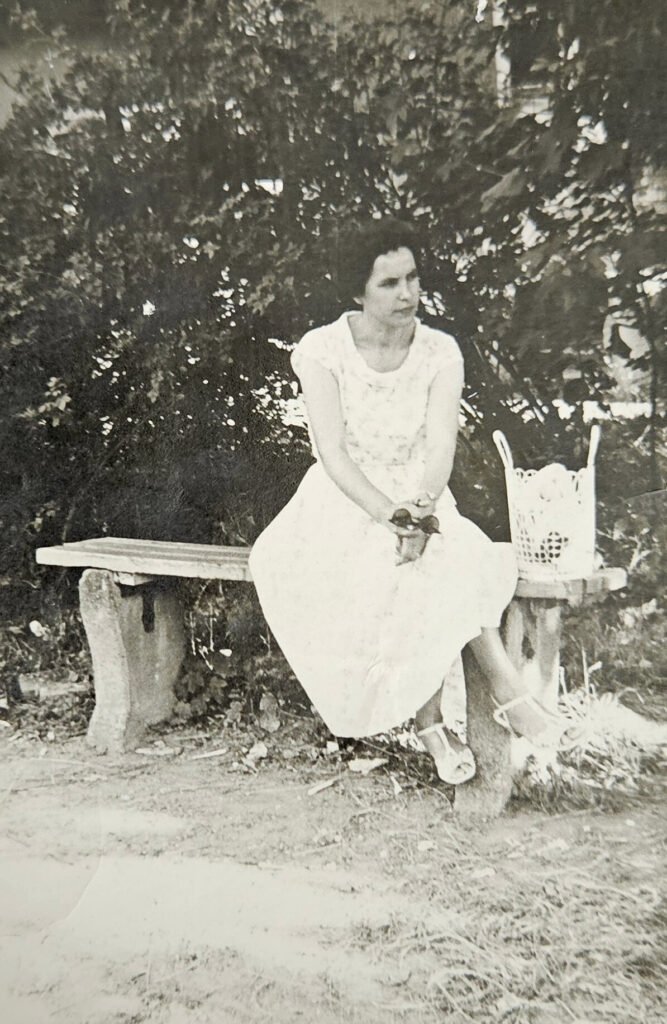
Learning about all of this gave me a renewed sense of admiration for my grandmother and all the Polish people who bravely stood against the oppressor. It reminded me of the importance of learning one’s own family history, of asking questions, of being curious.
It also prompted me to reflect on how the oppression of innocent people at the hands of power-hungry individuals is an ongoing issue that will likely never change. As long as people have the ability to accrue power and benefit off of others, they will continue to do so, no matter the cost. This is true across the board, regardless of political leaning.
If there is one thing I’ve learned from the actions of my grandparents and thousands of other Poles, from the actions of individuals across the world during various times of strife, it is that people, if they are able, must stand up against these injustices. These actions can make a difference, if not immediately, then for future generations. For these admirable, selfless actions of individuals standing up for the rights of other people, I am grateful. They are a reminder hope is not lost for humanity.
Postscript
More than 1 million innocent Polish citizens were sent to Soviet labor camps during the Second World War, with hundreds of thousands sent to the most remote areas (Siberia) of the Soviet Union.
6,000 Polish members of the Home Army were imprisoned in the Borovichi gulag. 3,500 of them made it back home.
I give credit to historian Ms. Halina Dudzinska for obtaining and preserving these important recollections. Ms. Dudzinska was passionate about history, especially the events that shaped the people of her home, Kolbuszowa.