August. Bright greens turn into muted shades of olive. Cicadas abound. Children begin the dreaded countdown to the first day of school.
In Poland, August is the month of harvest: wheat, barley, rye…you name it. In fact, even the name of the month, sierpień, includes the word sierp which means sickle.
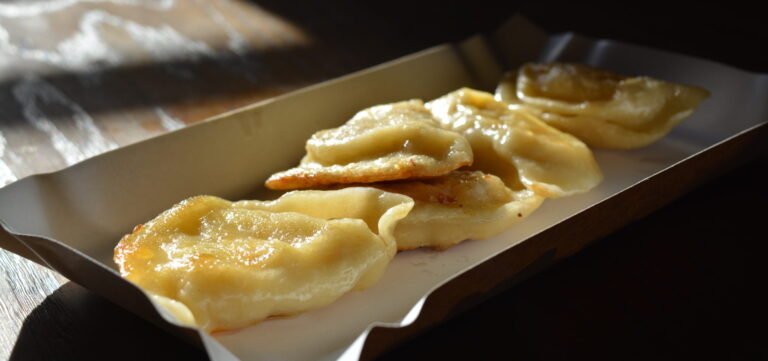
Fields dotted with golden hay bales. Markets brimming with juicy tomatoes and cucumbers. Kitchens smelling of fresh blueberry-filled buns (jagodzianki) and pierogi with plums.
It’s a beautiful month in many ways, but also a sad one. It’s a last hurrah for the treasures cultivated in the spring and enjoyed in the summer.
In Poland, perhaps the most telling and touching sign of this (aside from harvest) is the farewell to the storks as they journey to the south.
Storks: The beloved birds of Poland
The national bird of Poland is, officially, the white eagle, prominently displayed on the Polish coat of arms. Unoffically, however, it is the white stork.
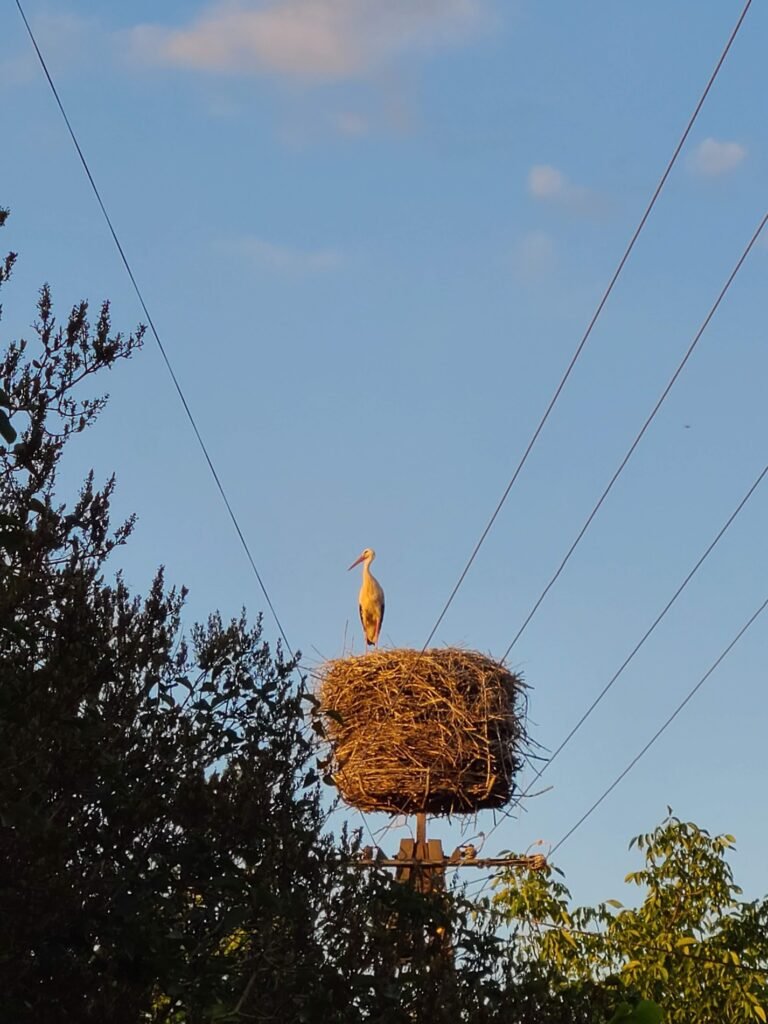
If you’ve ever been in the Polish countryside, you may have noticed gigantic nests atop telephone poles. These nests belong to our long-legged stork friends who spend a little over four months in Poland, breeding and raising their kids. According to research, 23% of the world’s white stork population breeds in Poland.
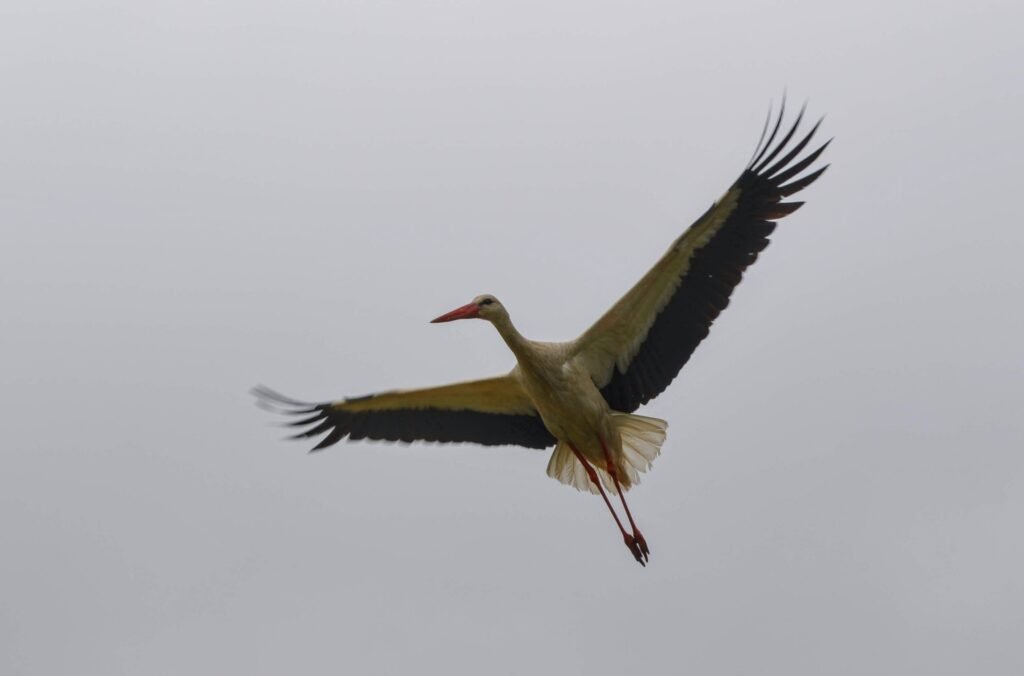
Polish people, particularly those who live in the countryside, are quite attuned to nature, I’ve found. Decades of traditions that emphasize the importance of crops, animals, herbs, and so forth, will have that effect. So it is not surprising the lengths that people will go to to help their stork neighbors, often times assisting with the foundation of the nest, ensuring it can bare the heavy load—or not removing it from ones roof (despite the heavy load).
In fact, Polish people love storks so much they help other countries reintroduce the birds to their locales (see the British White Stork Project).
A symbol of prosperity and fertility
Most people in the US are familiar with storks mainly because, as everyone knows, storks deliver babies.
For a long time, storks have symbolized fertility, with the details varying from culture to culture. Along with fertility, they are also seen as signs of wealth and peace. In Poland, the appreciation for storks is hard to miss.
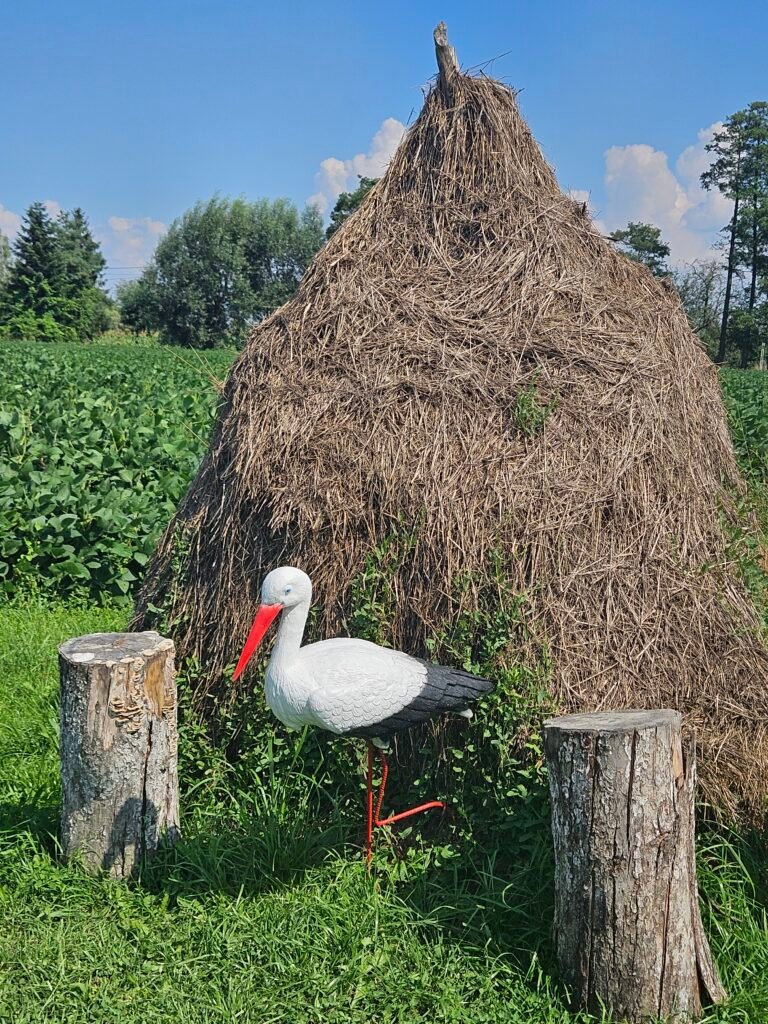
If you’d like to see some neat photos from the 1930’s featuring storks in the Polish countryside, check out this article from the Polish Radio.
Why I feel like a stork
Let’s return to the topic of the great stork migration. For many in Poland, it is a sad day to see their beloved birds take to the skies and make the long, dangerous trip down to Africa where they will spend the next several months enjoying the sun.
I didn’t realize how much I appreciated storks until a few years ago. I always saw them as a symbol of Poland, and thought of them as beautiful, unique birds. Seeing one sauntering around in a field is delightful—seeing five is pure magic.
But as I got older, I found myself not only enjoying but also relating to the stork. Was…I…a stork?
Now, I did not start thinking that I was actually a stork (I do have long legs, but a slightly smaller beak). Instead, I contemplated their movement: spending months raising a family in one place and then traveling hundreds of miles to ensure they have the resources (e.g. food) to survive. And then, in the spring, making the treacherous journey back to their Polish home.
My family left Poland for similar reasons…we too were seeking resources to survive. But despite leaving, we—as most immigrants do—felt a pull back to our country. An ache to return to the big nest our ancestors built to keep us safe.
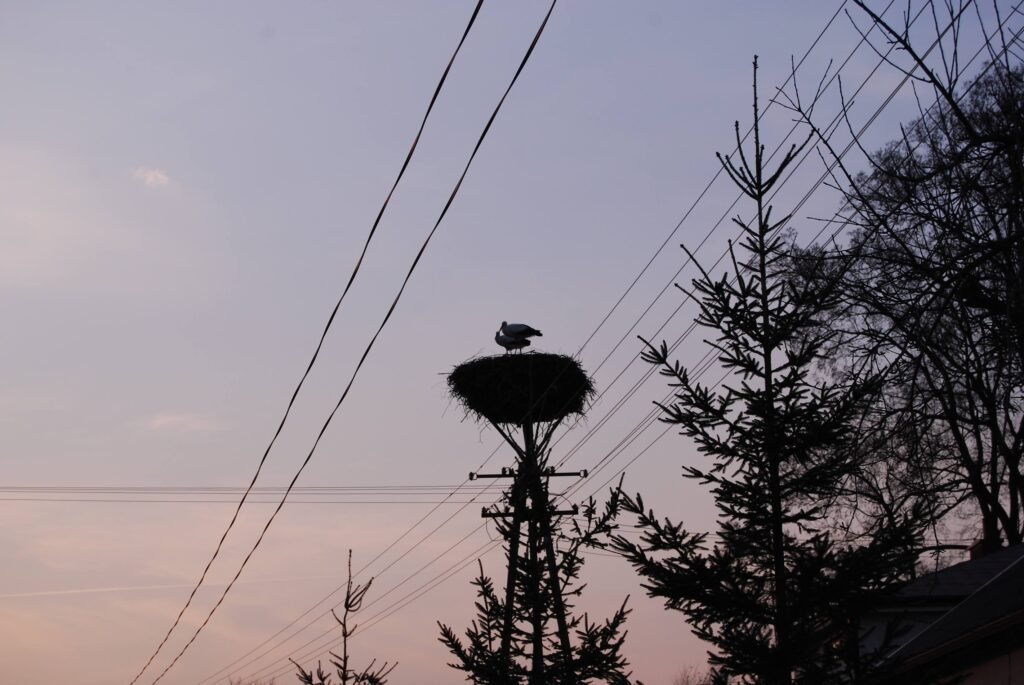
The similarity was a reassuring revelation. The stork didn’t just choose one home over the other: they decided to enjoy both. Much like I do not have to choose one which place I deem as home. Both are important, each unique, and each special.
Of course I cannot live in both places at once or abandon one randomly to live in the other. But, thankfully, I feel welcome in both, thanks to my family in the U.S. and in Poland. This reassures me that I can, in fact, call both places home and for that I am grateful.
So, to our dear stork friends, a farewell: May the skies be clear, the wind gentle, and your destination warm. Poland will be here, waiting for you, as always.