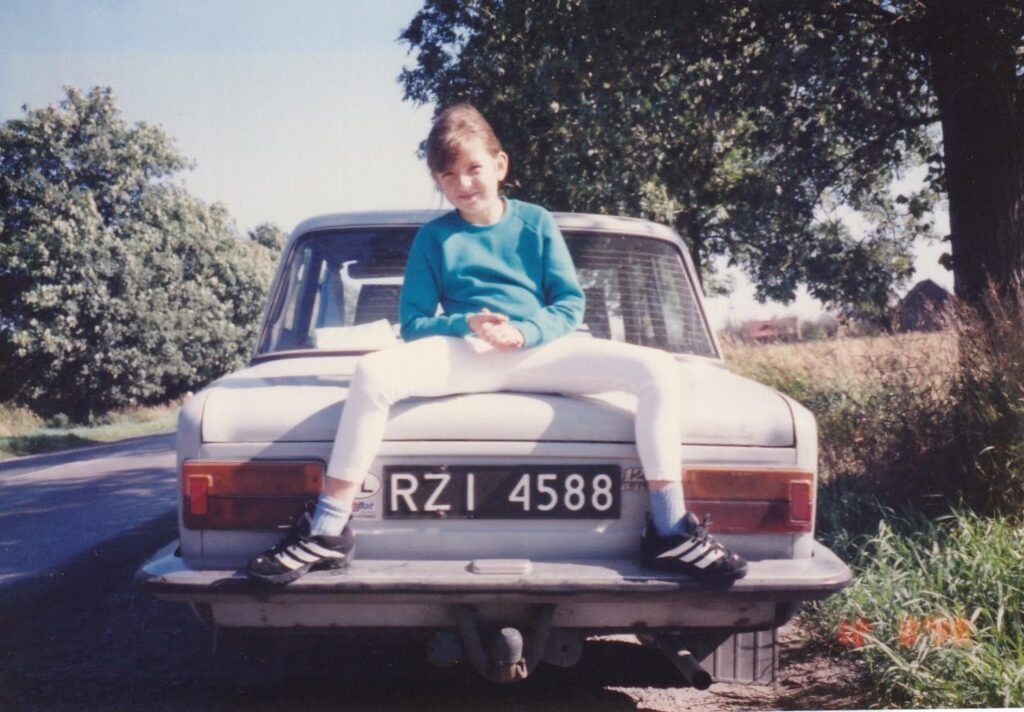
On a crisp September morning in 1996, my family and I embarked on a 5-hour drive from our little town of Kolbuszowa to Warsaw, Poland’s capital. My parents and I, along with my eldest sister Ania, rode in our big Fiat, while the rest of our siblings followed in their little Fiat. We were heading to the airport: my parents and I were about to embark on our immigrant journey.
But this post isn’t going to be about our life-changing adventure. Instead, I’d like to focus on something a little smaller: the cars.
Starting in 1967, every Polish person knew what a “big Fiat” was. In the Soviet-run Polish People’s Republic (1946-1989), cars were a commodity due to high prices and low salaries, and choices were slim. They could be manufactured by the state car maker or by…the state car maker.
The Passenger Car Factory
Established by the Communist government, the aptly named Fabryka Samochodów Osobowych (FSO), or Passenger Car Factory, initially produced two car models: Warszawa and Syrena. Unfortunately, the cars were inefficient and produced from outdated elements. Nearly twenty years later, in an effort to modernize the automobiles, the FSO agreed to sign a deal with Italian manufacturer Fiat. The FSO was allowed to produce select Fiat models under the brand Polski Fiat, or Polish Fiat. Thus the Fiat 125p, or big Fiat, was born, combining parts from the new Italian Fiat 125 and a retired model.
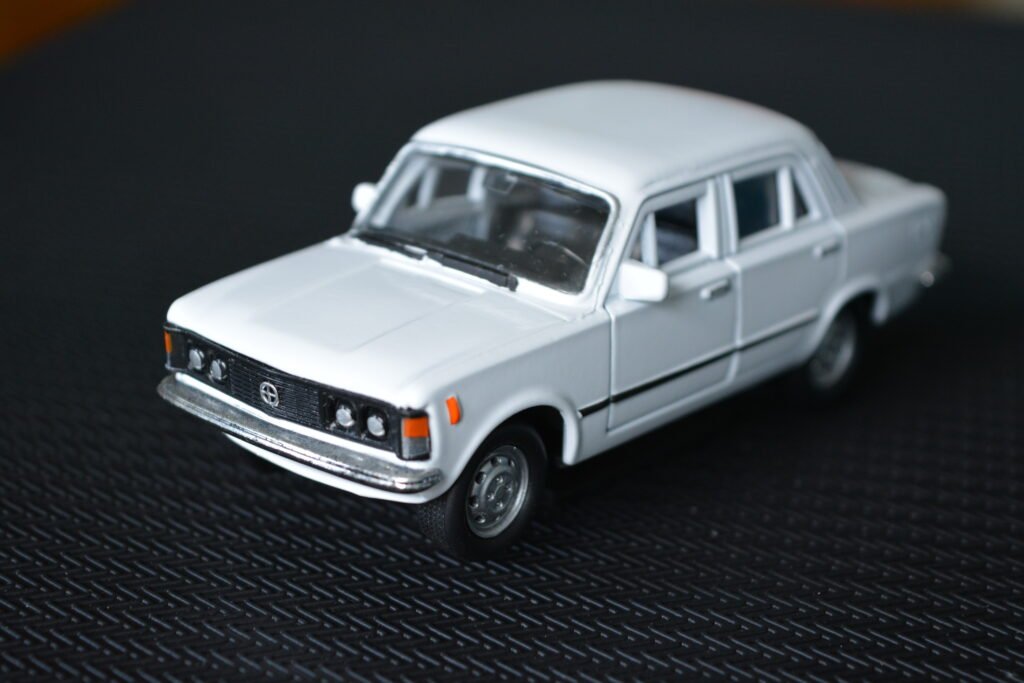
Back then, getting a car wasn’t as simple as showing up at the dealer and making a well thought-out decision. My parents shared their experience:
We went to Łódź, and gathered along with many others outside of the car dealer’s gates, on which hung a massive, uninviting chain…As the clock struck 8 a.m. and the chain was lifted, everyone ran to the first car they saw. The cars were in very drab colors… beige, cream, grey. As we were leaving, we saw a shiny red one driving out of the side; clearly someone made a deal to get a fancier model.
Though Fiat 125p production ceased in 1991, we used ours well until the 2000’s. It was roomy and comfortable–according to my parents–though I always found the fabric seats itchy.
Little Fiat, or Maluch
The little version of the Fiat, the 126p otherwise known as Maluch (literally “Little One”), was a two-door, four-person car that was surprisingly roomy for its small stature. Produced from the 70s until 2000, the Maluch was one of the most popular cars in Poland, as it was relatively affordable and available–though many people were still placed on a waitlist as supply had a hard time catching up to demand.
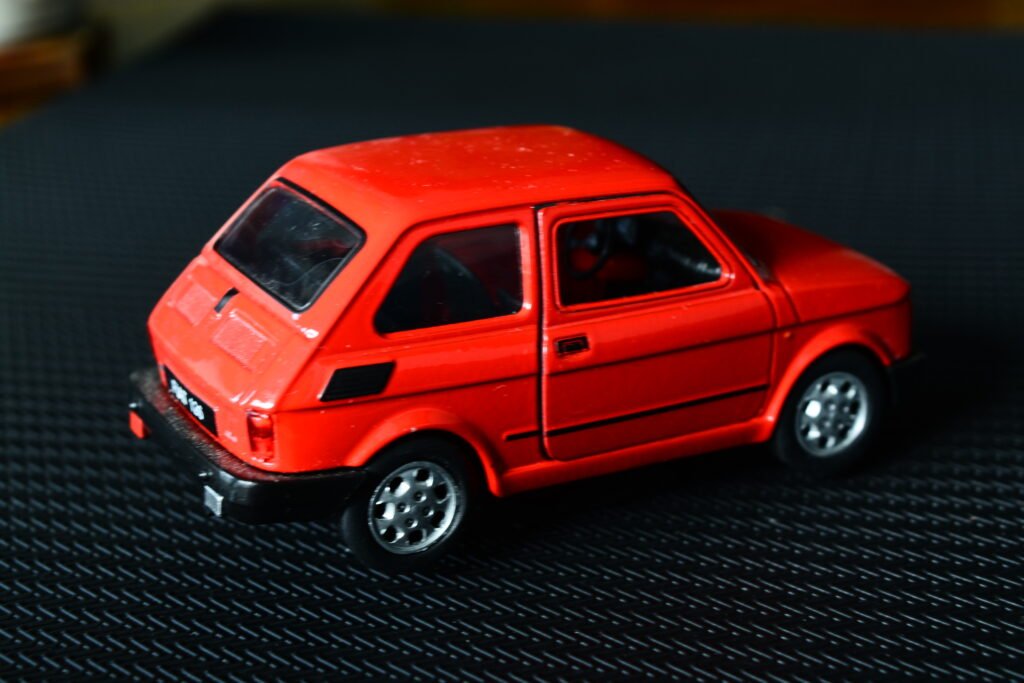
I have fond memories of Maluchy: my sister Ela and her husband Remik had a red one, made in ‘79 and purchased by them (from a coworker) in ‘97. My brother Mikolaj and his wife Bogusia had an olive green one, which they purchased from our uncle. To get an idea of how small and relatively light weight these cars were: Mikolaj once told me a story about how he needed to fix a part in the car that was difficult to access. He asked three guys who happened to be standing nearby to help him lift the car. In no time, they had the car on its side, ready for the fix. (And they didn’t even have Mentos!)
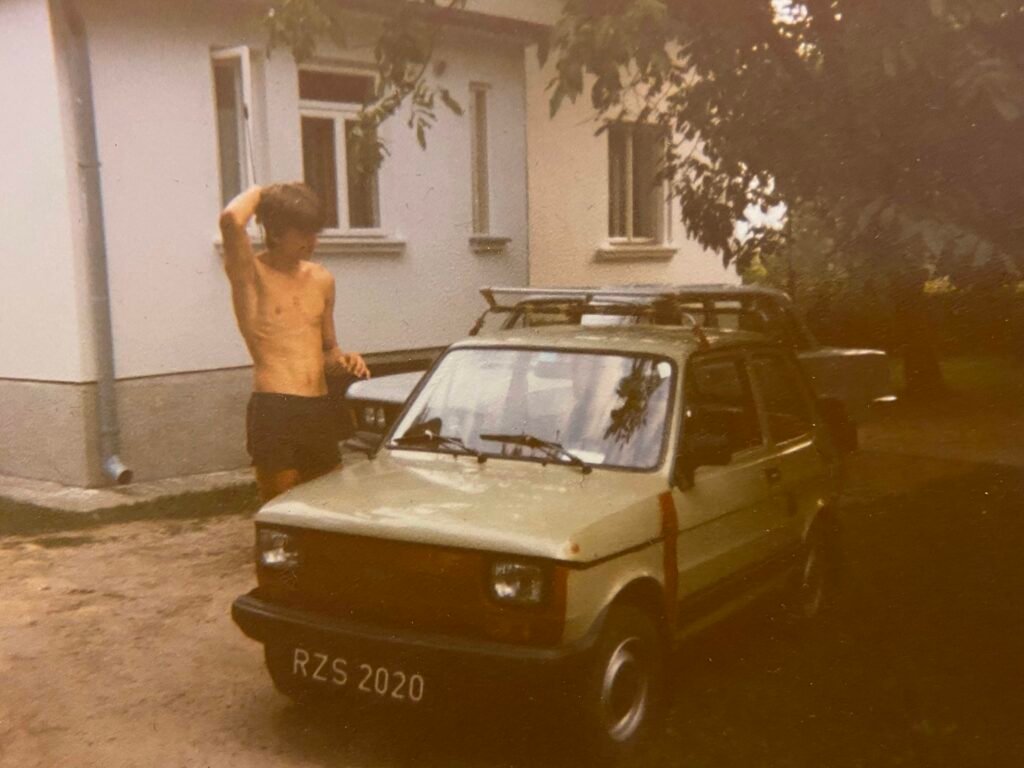
For a kid, it was a great car–snug, cozy. For many families, it allowed the freedom to travel further beyond their little towns. Now it’s a cultural icon, and it’s a thrill to see one on the road!